
Words English Borrowed, and From Where
 By Mir Hadi ·
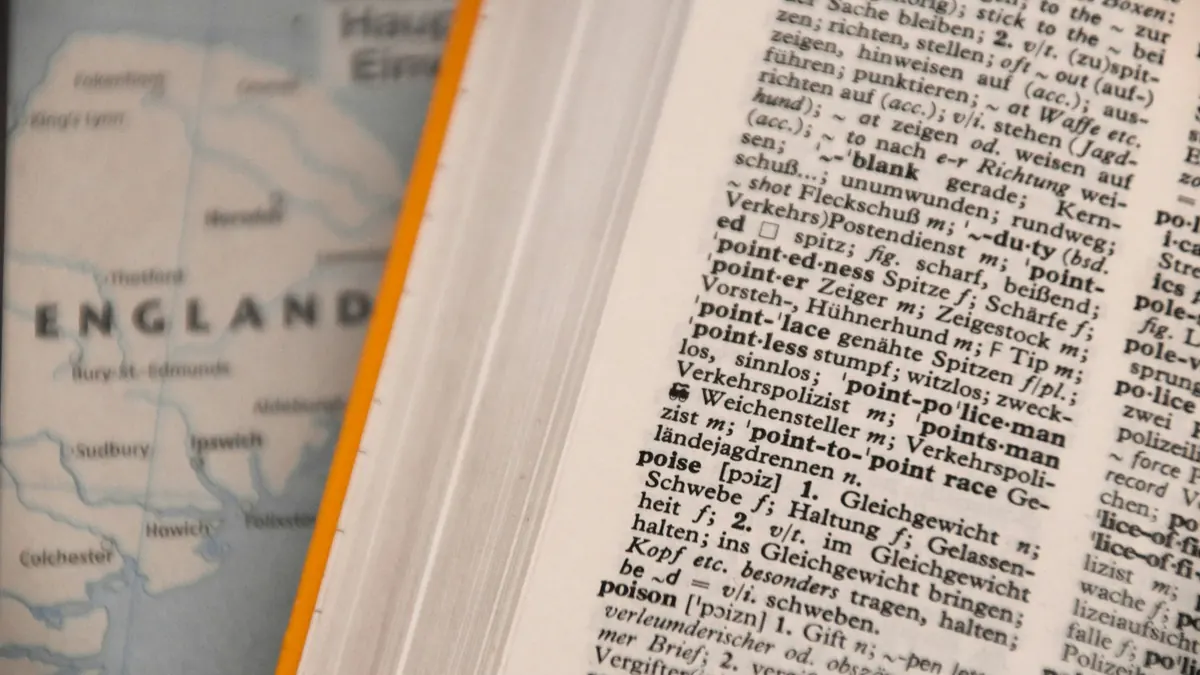
How much of English is borrowed depends on what you count. The best-known tally, Finkenstaedt and Wolff’s 1973 study of about 75,000 words in the Shorter Oxford Dictionary, traced roughly 28 percent to Latin, 28 percent to French and 5 percent to Greek, against about 25 percent from Germanic languages, most of that Old English. Count the words people actually use and the picture changes: in a 1975 study of business letters, Joseph Williams found that the thousand most common words were 83 percent native English. Both studies are summarised in Wikipedia’s article on foreign influences in English. So the dictionary is mostly borrowed words, while an ordinary sentence is mostly native ones.
Here are the main suppliers and a few of their better-known contributions. Many loans kept spellings English would never invent on its own, which is part of why English spelling is so strange. It also makes words like kayak, yacht and tsunami hard to see on a Scrabble rack; the anagram solver finds them when your eye won’t.
French
The biggest single source in the dictionary count, just ahead of Latin, thanks to the three centuries after 1066 when French was the language of law and court. Government, parliament, judge, jury, beef, pork, mutton (the animals kept their English names, cow, pig, sheep, because the farmers were English and the diners were French). Later waves brought ballet, café, restaurant, entrepreneur and genre.
Latin and Greek
Scholars, doctors and the church. Education, science, medicine, data, agenda from Latin; democracy, theatre, telephone, photograph from Greek, often coined centuries later from Greek parts. If a word sounds technical, it is probably one of these.
Old Norse
Viking settlers in the north of England gave English some of its plainest words: sky, egg, knife, window (literally “wind-eye”), husband, they, them, their. The pronoun loan is unusual; languages rarely borrow their pronouns. Wikipedia keeps a longer list of Old Norse loans and notes there are hundreds of them.
Dutch
Sailors and painters. Yacht, skipper, deck, cruise, landscape, easel, sketch, cookie (from koekje, little cake) and boss (from baas).
Spanish and Portuguese
Through the Americas: canyon, ranch, tornado, mosquito, patio, cargo, breeze, and via Portuguese marmalade, cobra, flamingo.
Hindi, Urdu and other languages of India
The British Raj brought home pyjamas, bungalow, shampoo (from a word for massage), jungle, loot, thug, bangle, cot, veranda, juggernaut.
Arabic
Through trade and mathematics, often via Spanish: algebra, algorithm, zero, cipher, coffee, sugar, cotton, sofa, magazine (originally a storehouse), safari (via Swahili, from the Arabic for journey).
Chinese languages
Tea (from Hokkien te, which is why coastal Europe says “tea” while overland trade routes say “chai”), ketchup (Hokkien kê-tsiap, a fish sauce), typhoon, kowtow, wok.
Japanese
Tsunami, karaoke, emoji (from e “picture” + moji “character”; the resemblance to “emotion” is a coincidence), sudoku, tycoon, honcho.
Everywhere else
Ski from Norwegian, sauna from Finnish, kayak from Inuit languages, chocolate and tomato from Nahuatl, zombie from West African languages, boomerang from Dharug in Australia, tattoo from Tahitian, ukulele from Hawaiian.
Robot is one loan you can trace to a single work. The word is Czech and first appeared in Karel Čapek’s play R.U.R., though Čapek credited his brother Josef with the word.