
Why English Spelling Is So Strange: A Short History
 By Mir Hadi ·
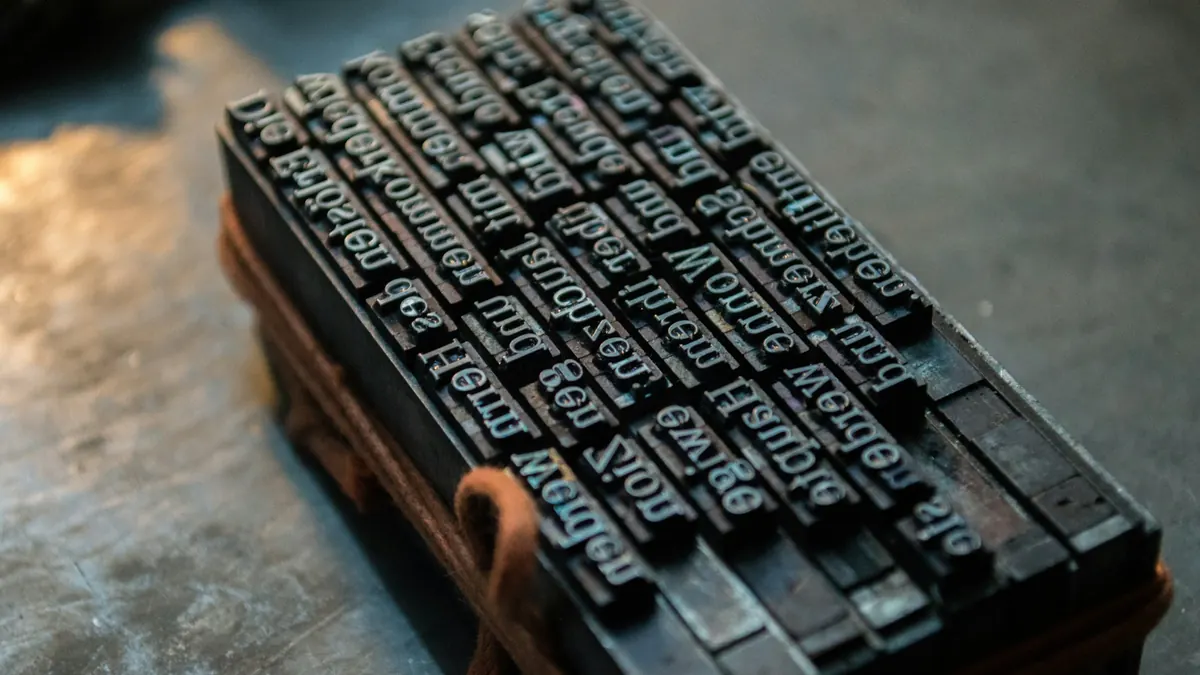
Depending on the accent, English has somewhere between 37 and 47 distinct sounds and only 26 letters to write them with. Wikipedia’s article on English orthography counts at least 18 spellings for the vowel in see alone. Though, through, tough, thought and bough share four letters and no two rhyme. None of it was planned. It built up in layers over about a thousand years.
Layer one: Old English
Before 1066 English was a Germanic language written fairly phonetically. Words like knight and gnaw were pronounced with the K and the G; knight had a throaty sound in the middle that the GH stood for. Over the centuries the pronunciation moved on and the spelling stayed put. Our dictionary still lists 221 words starting with KN, knee, knife and know among them.
Layer two: the Normans
After the Norman conquest, French-speaking scribes wrote English with French habits. They swapped the Old English cw for qu (cwen became queen), introduced ou for the long U sound (hous became house), and because the letter U was hard to read next to M, N and V in their handwriting, they changed sum to some, luve to love and munk to monk. The sound didn’t change; the letter did, for legibility.
Layer three: the Great Vowel Shift
Between roughly 1400 and 1700 the long vowels of English all moved, in what is now called the Great Vowel Shift. The vowel in bite had sounded like “beet”; meet had sounded like “mate”; house like “hoose”. Spelling had largely settled by the time the shift finished, so modern spelling records the pre-shift pronunciation. That’s why A in name and A in father don’t match, and why English vowels confuse every learner.
Layer four: the printers
William Caxton set up England’s first printing press at Westminster in 1476, and the man who ran the business after his death, Wynkyn de Worde, was a Fleming. Two explanations from this period get repeated often, and both are better read as commonly told stories than as settled history.
The first is that Flemish spelling habits gave gost its H and turned it into ghost. Wikipedia’s article on Caxton words this carefully as something that “is asserted” rather than shown. The second is that some typesetters were paid by the line, so a longer spelling like hadde earned more than had. It is a neat story, and it is hard to prove.
What is certain is that spelling stayed fluid for another two centuries. Shakespeare signed his own name several ways.
Layer five: scholars adding silent letters
In the 1500s and 1600s, writers who admired Latin “corrected” English spellings to show off a word’s origin. Dette became debt because of Latin debitum; doute became doubt; iland became island by a mistaken link to Latin insula (the word is actually Germanic). Nobody ever pronounced the B, B and S; they were added on paper.
Layer six: borrowing without respelling
English keeps the spelling of what it borrows. Colonel came through French with an R-pronunciation and an L-spelling, and English kept both. Yacht is Dutch, ballet is French, pizza is Italian, tsunami is Japanese, and each arrived with its own rules. The tour of words English borrowed lists where dozens more came from.