
Best Wordle Starting Words, Measured Against 1,574 Answers
 By Mir Hadi ·
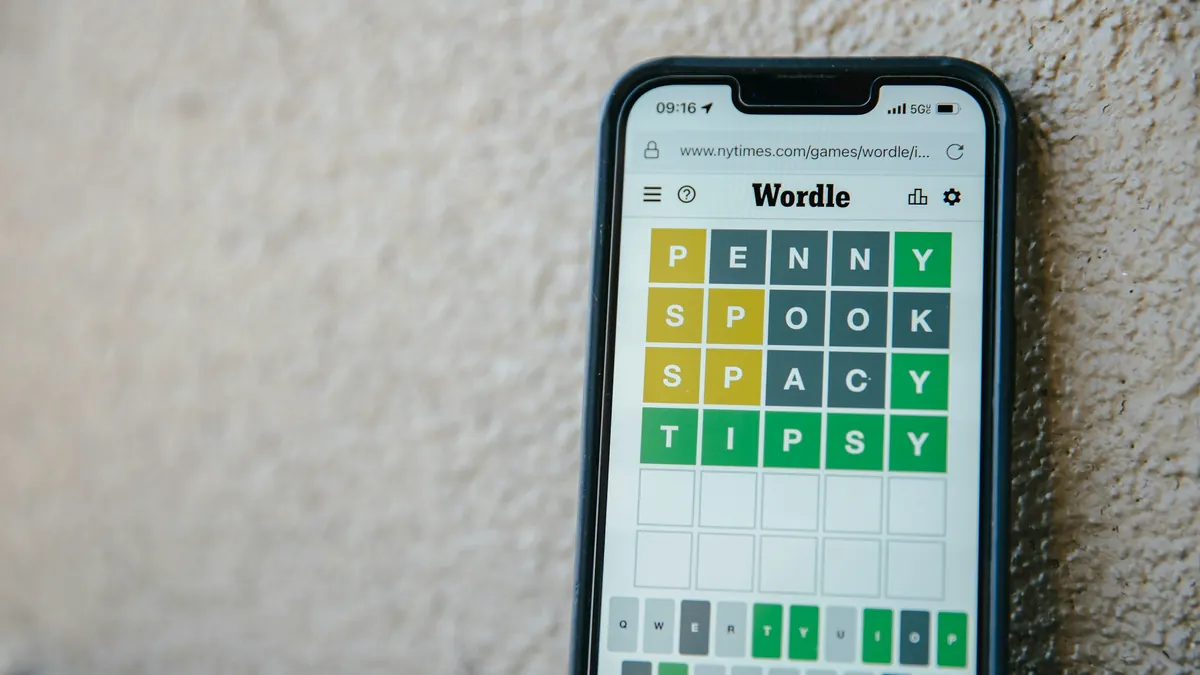
RAISE is the best common Wordle starting word in our test of 1,574 answers: after it, an average of 37.8 answers remain possible. IRATE (39.0) and ARISE (39.6) follow, CRANE sits at 48.3, and the vowel-heavy ADIEU (80.8) and AUDIO (124.0) come last.
Every Wordle player has an opener they swear by. Most of the arguments come down to taste, so we did the sum instead: we took an answer pool of 1,574 everyday five-letter words (the same pool Wordle Unlimited draws from) and, for each opener, worked out how many answers would still be possible after seeing its colours, averaged over every answer the puzzle could have.
Lower is better. The number is “how many words are still in play after your first guess”.
The results
| Opener | Answers left, on average | Worst case | Games with 10 or fewer left |
|---|---|---|---|
| RAISE | 37.8 | 102 | 16.2% |
| IRATE | 39.0 | 103 | 18.0% |
| ARISE | 39.6 | 102 | 17.2% |
| STARE | 43.2 | 132 | 22.0% |
| CRATE | 45.3 | 126 | 22.2% |
| TRACE | 45.7 | 126 | 24.2% |
| SLATE | 47.9 | 130 | 23.1% |
| CRANE | 48.3 | 139 | 24.8% |
| LEAST | 52.2 | 152 | 21.0% |
| ADIEU | 80.8 | 186 | 10.0% |
| AUDIO | 124.0 | 295 | 11.9% |
“Worst case” is the largest group of answers that share one colour pattern. For most openers that is the all-grey result.
ROATE, a word that is valid as a guess but that nobody says, scores 37.5, a hair ahead of RAISE. Not worth memorising.
What the table says
The best openers all have an R, an A and an E, and they end on a letter that answers often end on (E, or S for the rare plural answer). Where the letters sit matters as much as which letters: CRATE and TRACE use identical tiles, yet CRATE does better because C is the more common first letter and T the more common fourth.
CRANE, the opener most strategy guides recommend, is good but not top: it swaps the S of RAISE for an N and gives up the common “S somewhere” test. On average it leaves about 10 more answers than RAISE, roughly 28 percent more to sort through on turn two.
CRANE does win one column. It leaves 10 or fewer answers in about a quarter of games, against 16 percent for RAISE. RAISE has the better average because its bad results are less bad: its worst case is 102 answers, CRANE’s is 139. If you like the feeling of a sharp first guess, CRANE gives it to you more often; if you want the fewest words to sort through over many games, RAISE is the pick.
The vowel-heavy openers
ADIEU and AUDIO test four vowels each, which feels productive. It isn’t. Vowels are the easy part of a five-letter word; consonants and their positions do most of the narrowing. After ADIEU, about 81 answers remain on average, more than double RAISE’s 38. After AUDIO, 124, and its worst case leaves 295.
Second guesses matter more
A good opener gets you to about 40 candidates. The job of the second guess is to split those 40 as evenly as possible, which usually means a word built from five letters you haven’t tried yet, even if that word can’t be the answer. The five-letter word list is a quick place to find one. Spending turn two on information rather than a long-shot solve does more for your average score than any other habit.
If you’d rather not think on turn two, a fixed pair works well. RAISE followed by COUNT, played whatever colours RAISE shows, leaves 4.1 answers on average and pins down the exact answer in about 30 percent of games. DONUT does just as well (also 4.1), with CLOUT and CLOTH close behind at 4.2 and 4.3. This only works in normal mode, because hard mode makes you reuse the letters RAISE revealed.
A worked example
Say the answer is POUND.
Turn 1, RAISE: all five tiles come back grey. That is RAISE’s worst case, with 102 answers still possible.
Turn 2, BLUNT: the best second guess for those 102, leaving 3.8 on average. Here the U and N go green in third and fourth place, and seven answers fit: CHUNK, FOUND, HOUND, MOUND, POUND, WOUND and YOUNG.
Turn 3, the trap: the tempting play is to guess the -OUND words one at a time. If FOUND comes back wrong, HOUND, MOUND, POUND and WOUND all still fit, and you have three turns for four words, so you can still lose.
Turn 3, the better play: WHOMP, which cannot be the answer. It splits the seven into six different colour patterns, and only FOUND and YOUNG share one. Against POUND the O and P both come back yellow, a pattern only POUND fits, so you solve on turn four. In the worst case you solve on turn five.
The Wordle solver does this filtering for you: it lists every word that fits your greens and yellows, most common first.
Method
Answer pool: 1,574 common five-letter words, frequency-filtered, plurals removed. The original Wordle drew from a curated list of 2,309 answers, so our pool is smaller and leans towards everyday words. For each opener we coloured it against every pool word using standard Wordle rules (including duplicate-letter handling), grouped the pool by the resulting colour pattern, and took the expected size of the group the real answer would land in. Different answer lists shift the numbers by a few points but not the ordering.